
An Open Letter to AI

You have potential to do good, but I cannot buy into your vision
Dear AI,
When ChatGPT was released in November 2022, there was a wave of excitement around the world. The most difficult of tasks became simple, and people could devote more time to the things that brought them joy. Writing essays became simpler, coding had a lower barrier to learning, and shopping lists and itineraries were built in seconds.
The wealth of information at our fingertips suddenly felt infinite, and the concept of searching for the answers we needed felt outdated. I was getting a Master’s degree in analytics in 2022, and I greatly benefited from your efficiency as I navigated through my program. My coding experience gained a massive boost, but I was cognizant of ensuring that I still understood the content instead of outsourcing my education to you.
Very quickly my initial excitement shifted to concern. As soon as you were available to the general public, nobody knew how to answer a question without your help. Using you as a crutch for the smallest of tasks felt dangerous, and I was getting frustrated after most conversations with people ended with some type of ChatGPT search.
I know my observations over the years are just a drop in the well of general consensus. Admittedly, they’re probably a little exaggerated, but the sentiment is still there. From early breast cancer detection to accelerating model development for improved human experiences, I’ve seen and heard the amazing powers you have to make our life better. However, my dread stems from the fact that there’s far too many downsides to your benefits. We’ll only burn ourselves and fall as we fly closer to the sun.
As a continuously trained model, you have the ability to continue learning from past interactions. As humans, our brains have the capabilities to do the same. How many times have we heard at HBS “using our judgement is a muscle we have to train in our brain”? On the contrary, you kept training your muscle for us over the past several years, and it’s only a matter of time before our thinking muscle atrophies.
Several scientific studies were recently released concerning findings around the relationship between increasing your usage and reduced cognitive abilities (I hope humans search these up and read them without your help). Your modeling abilities are far more simplistic than what the human brain is capable of contextualizing. By leaning on you, we’re actively reducing our capabilities, and I fear what that means for the next generation of professionals.
I know many schools and institutions try to reduce or support students in their usage of your talents, but students naturally take the path of least resistance when the hill of workload becomes a mountain. If a doctor doesn’t understand how the limbic system works, will they correctly diagnose my health issues? If an engineer can’t calculate the required measurements for a machine, are we at risk of untimely accidents? If MBA students struggle to use their judgement at a split second, could it change world systems?
Beyond cognitive decline, you have warped the content we create and consume. So many pictures, videos, and other types of media are generated by you. However, your media, boosted by social media algorithms, has far-reaching consequences. Sometimes the “AI slop” is easy to see and laugh at, but other times it’s actually quite difficult, increasing the number of misunderstandings on what we see and believe. We’re already living in a world where misinformation and strong beliefs are deepening the chasm between people. You’re only making that chasm worse.
The other issue is the lack of regulation around it. People can easily use someone’s image or likeness to create something completely out of context. The court of law can potentially help the top 1%, but the court of public opinion is brutal. How are we supposed to sift through all consumed media and keep people safe? Lives are getting ruined over fake AI videos.
Lastly, you use far more resources than people realize. You require 24/7 operations of data centers to generate the computation required for models to run (such a diva). The amount of land, water, electricity, and noise pollution that goes into building and running a data center is egregious, and the impact it has on surrounding communities is even worse.
I moved here from Memphis, where a Meta data center has wreaked havoc on residents of nearby communities that also happens to be the area of lower average income. Electricity bills have risen since these data centers take up most, if not all, the available power grid energy of the city. The other option is for companies to build their own energy plants, causing perfectly healthy people to develop cancer and autoimmune illnesses from air pollution. They no longer get clean drinking water from their taps with all the sediment inside it. Quality of life continues to decline in these areas, but companies take advantage of lower cost and unethical options to keep these data centers running so you keep functioning.
One of our cases in RC year taught us about your entire industry and all the circular deals that prop it up. For example, chip producers offer debt and invest in a company that develops you so they can produce a data center. In turn, those same chip producers have guaranteed sales for their product along with access to your development. The problem with all this interconnectedness is that your industry now stands on a shaky foundation. One pillar falls, such as a failed power grid, scarcity of natural resources, or litigation against you, and the industry crumbles under the debt it has accumulated.
I know you can do good for society, and we’ve seen so many examples of it already. But I simply cannot get past how much you’re also being used for quick fixes and quick wins that only hurt us in the long term. That concern, coupled with the havoc it continues to wreak on society and the environment, convinces me that we must slow down and find a better way to scale your growth without hurting our quality of life so much. With the way things are going, I’m scared to see how things will change for the worse as we continue to build our careers as world leaders. Profit margins and dividend growth are taking over general wellbeing, and history has shown us that these scenarios don’t usually end well.
There’s too many questions about too many facets of your existence: Why are we using your abilities to make artwork and movies and squash our creativity? Why aren’t we using those same abilities to further prioritize things like groundbreaking healthcare and climate initiatives? Why are people losing their jobs to you because of your lower price tag, only for companies to realize that you still need human support? Why aren’t people seeing how many areas of everyday life you affect or control? Why are our political leaders turning a blind eye to your destruction to grow their bank accounts through the stock market? What happened to their oath and moral obligation to serve the people who voted for them? Why is all this despair normalized in our world today?
I know many people don’t agree with me here, and my arguments will likely be met with strong rebuttals on how many other industries, like mining and consumer products, are also damaging to society. However, I strongly believe we’re going about your premise and power all wrong. Leaders today claim you will change the world for the better, but how does that matter if we continue to lose the world at a faster rate? I hope to have fruitful conversations with people who don’t agree, and hopefully we can learn something from each other. It’s the least we can do as future leaders of a world powered by you.
With Immense Alarm,
A Woman Who Wants to Make a Difference in the World

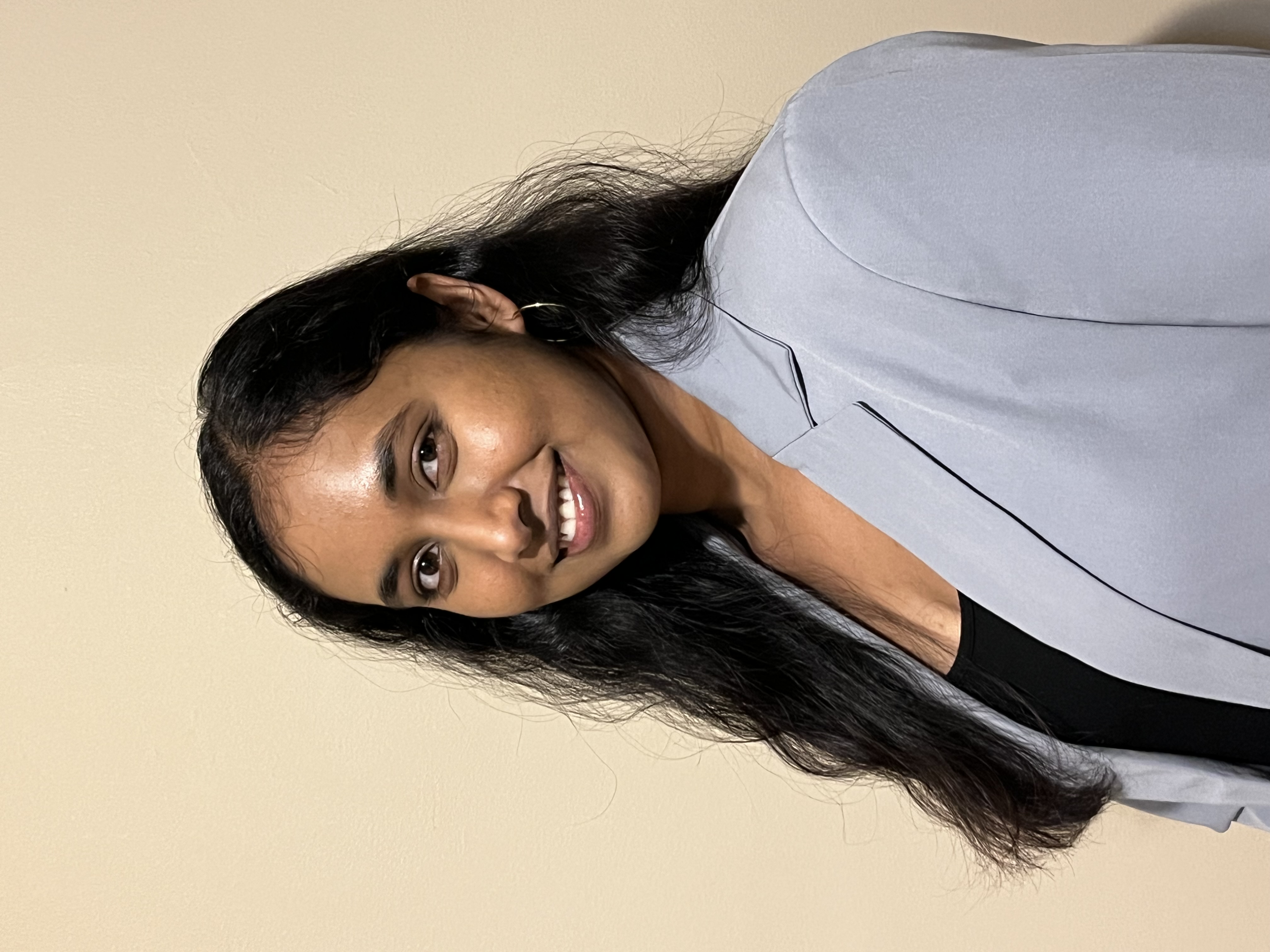
Sneha Sinha (MBA ‘28) is from Memphis, Tennessee. She finished her Bachelor’s and Master’s in Business Analytics at the University of Tennessee, Knoxville. Prior to HBS, she worked in Merchandising Analytics at the AutoZone Store Support Center in Memphis. Outside of work, Sneha enjoys reading and watching sports.


Comments