
Is Impact a Nothingburger Now?
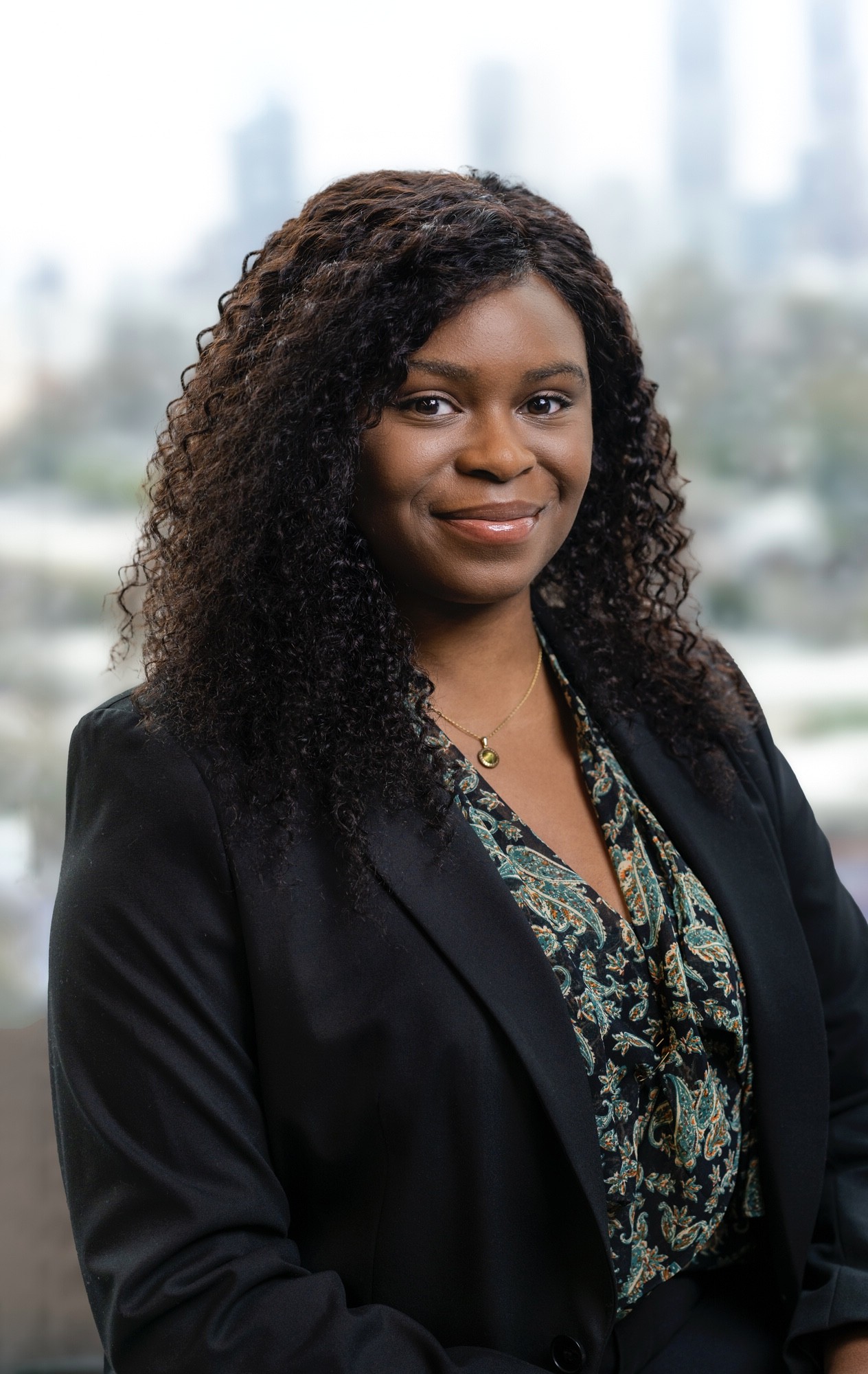

Folu Ogunyeye (MBA ’27) on apathy and abstraction in the business of social change work
When I handed in my notice at my job before coming to HBS, I braced myself for a culture shock. Having spent the majority of my career in the social impact sector, I anticipated the case method to be a grueling exercise in defending my ideals against those faithful to the unrelenting bottom line. Yet I have been pleasantly surprised to find a sizable community of students who have engaged with or hope to support the non-profit world in some capacity, whether as a volunteer, as a board member, or through pro bono work. The institution even provides a robust scaffolding for this work: I have found myself feeling at home within the programming of the HBS Social Enterprise Initiative, as well as in the Social Enterprise and Impact Investing student clubs.
What has surprised me the most about coming to HBS after working in the non-profit sector is how “social impact” is conceptualized, especially in the ways that non-profit organizations are represented in the cases taught during the RC year. Without getting too bogged down in the specifics, I have noticed that there is a tendency for viewpoints on the feasibility of social change work to fall into two main camps: the Skeptics and the Technocrats.
The Skeptics, on one hand, treat social and environmental impact as a fringe externality, i.e., a “nice-to-have” variable that is too mathematically “fuzzy” to be factored into the “real work” of discounted free cash flow analyses.
“Measuring impact is hard, so why do it?” — A Skeptic, probably.
Yet I have noticed that those of us at HBS who oppose the Skeptics (myself included) tend to fall prey to another pitfall by swinging to the other extreme. The Technocrats respond to this marginalization by over-engineering impact into a sophisticated “product,” layering on convoluted frameworks and shiny studies to prove their work is “rigorous” enough for elite spaces. In doing so, they force fit urgent human crises through the narrow, impersonal needle of data points, prioritizing intellectual sophistication over the uncomfortable, messy work of holding power accountable.
“The work of generating positive social and environmental impact is so complex that you can do it without working closely with those most impacted by your work.” — A Technocrat, secretly.
I find myself falling under the Technocrat camp more often than I would like, such as using sector-specific jargon when it would be more helpful to speak in accessible terms. It is nice to feel like an expert, but should this take priority over actually being effective at driving impact? Technocrats can too easily fall into the trap of wanting to prove to the Skeptics that it is possible to “do well by doing good.” In Business School Land, we speak of the “double bottom line” and the ever-growing alphabet soup of interventions involving ESG, SROI, and (the virtually defunct) DEI that deliver market-rate returns through carefully crafted portfolios and flashy pitch decks.
I think both camps are exposed to the same risk of viewing the social and environmental consequences of business as abstract ideas that are only considered during impassioned debates in Aldrich classrooms. I have been trying to put my finger on how exactly to describe my uneasiness with this distancing of impact from the many lives impacted by business and policy decisions and have settled on the term impact neutering. Impact neutering describes the sterilization of the meaning of impact. Through this process, “impact” becomes an abstraction at best and a self-serving, virtue signalling exercise at worst (see “impact washing” for more on the latter). This idea builds on existing concepts that critique the professionalization of social impact and international development work like the “non-profit industrial complex,” as outlined by INCITE! or, more recently, “MarketWorld,” as coined by Anand Giridharadas in his seminal work, Winners Take All: The Elite Charade of Changing the World. At the core of these concepts is the crucial question of whether the purpose of social impact initiatives should be to a) provide band-aid solutions that leave the current power dynamics untouched, or b) question and overhaul the systematic root causes of symptomatic issues.
Impact neutering is a conceptual side-effect of a deeper trend that has material consequences: the concentration of wealth and power into fewer hands as the rest of the world becomes increasingly vulnerable to the “polycrisis” of climate emergencies, economic instability, and uncertainty in the face of AI. The role of those working in social impact becomes increasingly opaque when our shared understanding of what impact even means becomes murkier and grows more disconnected from the harsh realities that ordinary people have to deal with on a daily basis.
Beyond Impact Neutering: The Case for Reckoning and Accountability
No one really wants to have an honest conversation about the way their work is complicit in upholding structures of oppression. But given the direction that society is heading, when will we have these conversations? Will the right time ever come, or will we be stuck in an everlasting call-and-response to the tune of “Tomorrow” from Annie?
I have noticed that in Business School Land, the closest we ever really come to connecting the dots between our individual actions and material consequences is in FRC and LCA, where we examine cautionary tales of HBS alumni who once sat in our very seats but now find themselves serving time for fraud or insider trading. Unfortunately, it feels as though those classes deliver the biggest takeaways to be, “it’s okay to harm others in the name of shareholder value, just as long as you don’t break the law while doing it.” We spend time debating whether their illegal misgivings were “a victimless crime” without leaving much space to question why business leaders are granted a “moral pass” for systemic harm beyond the remit of the courtroom. This is impact neutering in its full glory, as we fail to connect the dots between action and consequences for wider society and instead are only ever concerned with immoral actions that result in jail time for the individual perpetrator.
There have been attempts in the HBS community at reconciling this discrepancy. In 2009, a group of HBS students created the “MBA Oath” in the wake of the global financial crisis. It was a voluntary pledge for graduating students to “create value responsibly and ethically” and recognize that their decisions have “consequences for the well-being of individuals inside and outside [this] enterprise.” It was born out of a genuine desire to restore the reputation of the MBA degree and promise that we would never again be the “villains” of a 2008-style collapse.
However, over 15 years later, the Oath feels more like a surface-level gesture than a structural solution. It is a private, voluntary act of virtue that relies entirely on an individual’s personal conscience. The problem is that a leader’s conscience is rarely a match for the crushing incentives of shareholder primacy. An oath without an accountability mechanism is just another form of impact neutering, i.e., a moral shield that allows us to feel virtuous without ever actually surrendering power.
To move beyond the performance of good intent, we must transition from individual morality to systemic architecture. This work should not be left just to our friends at the Kennedy School or the Law School. If we pride ourselves on being “disruptors” capable of bringing audacious ideas to market, then the ultimate frontier of innovation is not a new product, but rather the fundamental redesign of the firm itself to serve more than just the capital funding it. We are seeing a growing movement toward the “ownership economy” in the form of alternative ownership structures like employee stock ownership plans (ESOPs), community land trusts (CLTs), and multi-stakeholder cooperatives. Unlike the voluntary pledges of the past, these models embed accountability into the modus operandi, ensuring those most impacted by a business’ decisions possess the formal power and financial stake to guide its direction. While this may not solve the world’s greatest ills in one fell swoop, it sure seems like a step in the right direction.
We cannot continue to treat the symptoms of our system while ignoring the ways we benefit from the disease. To be a leader is not to find a clever way to “do good” on the sidelines; rather, it is to take responsibility for the baseline of harm baked into our very models. If “impact” is to mean anything at all, it must stop being something we perform for one another and start being the standard to which we allow ourselves to be held on a systematic level.

Folu Ogunyeye (MBA ‘27) grew up in Milton Keynes in the UK. She graduated from the University of Cambridge with a degree in Human, Social and Political Sciences. Prior to HBS, Folu worked in HR at BlackRock in Atlanta and in social impact consulting between New York and London. Beyond work, Folu loves to write, explore art galleries or catch a live jazz gig.


Comments