
The Silence on This Side of the River
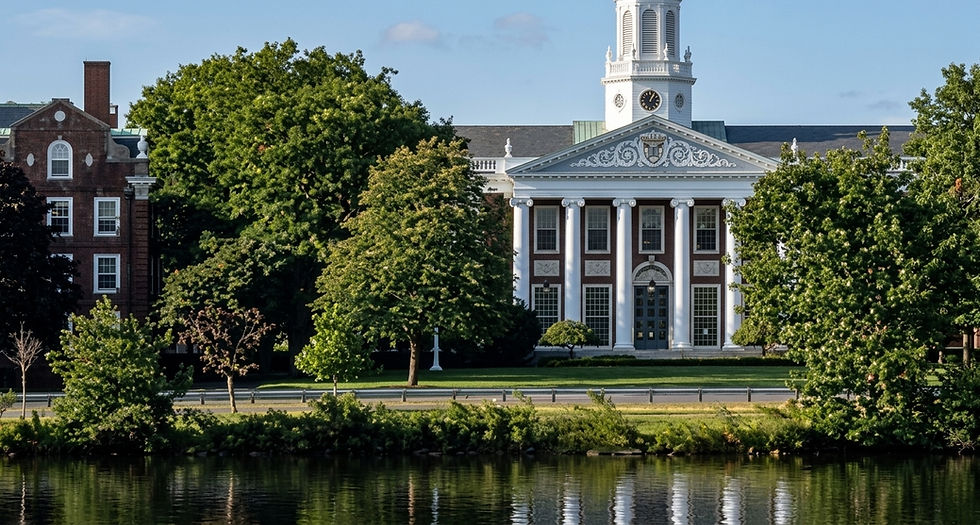
Last fall, during my first semester here, one of those moments happened when the world outside campus suddenly became difficult to ignore. The specifics matter less to me now than what happened next. For days, the news dominated headlines and conversations elsewhere on campus. I happen to live on the other side of the river, among the undergraduates, and I watched them grapple with it in real time: dining hall conversations, group chats, hallway debates that ran long past when they should have ended. Then I'd walk back across the bridge to the business school, and it barely registered. A passing comment before a cold call started, then back to case prep and recruiting timelines, as if the rest of the world hadn't happened.
That silence stuck with me. It wasn't that I expected everyone to agree, or even to have a fully formed opinion. What struck me was that a room full of people who are being trained to lead had almost nothing to say to each other about something the rest of the world was actively wrestling with. We are not an incurious group. We debate constantly: cold calls, negotiation exercises, whether a certain go-to-market strategy makes sense. But faced with something real and unfolding outside our case studies, most of us said nothing at all.
I do not think this was really about that one moment. It was just the clearest example of something I had already started to notice. We do talk about politics and policy at HBS; BGIE alone proves that. But much of it happens in the same kind of room: a classroom, a professor at the front, a grade eventually attached. Put a case in front of a room and hands go up immediately. Put the same kind of live policy question in a lower stakes room—a dinner, a group chat, a random Tuesday—and the energy changes. That is not because business questions have clear answers and political ones do not; most cases are deliberately ambiguous. It is because disagreeing about a pricing strategy in a classroom is institutionally sanctioned. Disagreeing about a policy question outside of one does not come with that same protection. People tend to hear it as a statement about your values, not just an idea you are testing.
That, I think, gets closer to what is missing. Most places where political disagreement happens today are unusually high stakes. Social media turns a passing thought into a permanent, attributable statement. A classroom comment happens in front of ninety people with a grade attached. Even friendships can make disagreement feel personal. So where exactly is a person supposed to say, "I think I believe this, but I am not sure, convince me I am wrong"? I do not think what is missing at HBS is a venue for people to announce fully formed political opinions. I think we could benefit from somewhere to think out loud before we have reached a conclusion at all, to come defend an idea we are not even sure we believe yet, and leave without anything needing to be decided.
This matters more than it might seem. For two years, we are surrounded by people whose experiences, assumptions, and views of the world are genuinely different from our own: different countries, industries, backgrounds, families, and beliefs. That will not last. Soon enough we scatter into companies and cities where the people around us may end up thinking a lot more like we do. There may be no better time than right now to practice sitting with an argument we dislike, understanding why someone actually believes it, and occasionally letting ourselves be talked out of what we thought walking in. Passively scrolling past a headline is not quite the same as sitting with an idea long enough to defend it or reconsider it.
None of this requires anything complicated. It does not need a syllabus, a professor in the room every time, or a formal curriculum. Mostly it requires a standing space where showing up to debate an idea is simply a normal Tuesday, not a notable event. The questions can be simple: Should prediction markets be legal? Should the government regulate children's access to social media? Should college admissions still consider legacy status? All we need is a small group and a genuine question worth sitting with. That is the space the Government and Public Policy Club is trying to build this year.
If any of this feels familiar - the silence, the sense that something worth talking about kept getting deferred for something more urgent - consider it an invitation. Come disagree with someone. Come say the thing you are still working out, the position you have not fully committed to yet. Nobody needs the right answer walking in. We just need people willing to show up and talk, so that this fall, when something happens in the world, the silence on this side of the river is a little less loud.

Injil Muhammad (MBA ‘27) is Co-President of the Government and Public Policy Club. Prior to HBS, he worked in investment management at Goldman Sachs. He graduated with a degree in Applied Mathematics from Harvard College.


Comments