
For the Tinkerers and the Dreamers

Bringing Deep Tech to HBS
“Any sufficiently advanced technology is indistinguishable from magic.”
– Arthur C. Clarke
At the RC startup bootcamp info session, the presenter was explaining the program's parameters: well-suited for early prototypes; probably not for, say, "launching a satellite." I (Michelle) had just come back from watching rocket launches at Cape Canaveral and raised my hand. “If anyone’s interested in launching satellites, let’s talk after!” Soon, I found myself surrounded by an enthusiastic group. Some had engineering backgrounds. Some, like me, didn’t.
That was the genesis of a WhatsApp chat called "HBS Deep-Tech Enthusiasts," whose members would regularly meet at Grafton for beers. It was immediately clear this was a special group of the tinkerers—the curious, the ones who dared to believe in “magic.” But it was equally clear that this group was fragmented and underserved. We were, at best, split across different clubs; at worst, entire fields like robotics or biochemistry had no natural home at HBS, making it harder to find others who might’ve been interested. I (Sanchit) suggested we needed a larger tent. Months later, we made the Automation & Deep Tech Club an official club with critical support from MS/MBA faculty, the GRID, and the Tough Tech Ventures professors. The club spans areas including quantum, climate, advanced manufacturing, robotics, autonomous vehicles, AI/ML, material science, and biotech. What we couldn’t have anticipated was the groundswell of latent interest we had actually tapped into.
What Deep Tech Actually Is
Arthur C. Clarke once wrote that “Any sufficiently advanced technology is indistinguishable from magic.” In a world where we most often hear about repackaging existing technologies or building faster, cheaper apps, deep tech strikes a different tune. It starts from a genuine scientific breakthrough and asks: what does the world look like when yesterday’s magic becomes tomorrow’s reality?
HBS trains the muscle of critique, teaching us how to question assumptions and make arguments that withstand probing. It's a tremendously valuable skill. Yet how can you analytically critique something that’s never been done before—something like “magic?” There's a tremendous power and privilege in choosing to be optimistic about scientific breakthroughs, in choosing to believe before proof, in choosing to make possible what previously was impossible.
The Automation & Deep Tech Club is our answer to that gap, bringing together a community of HBS students who dare to believe in “magic” while using HBS’s classic critical frameworks to make these technologies viable and real.
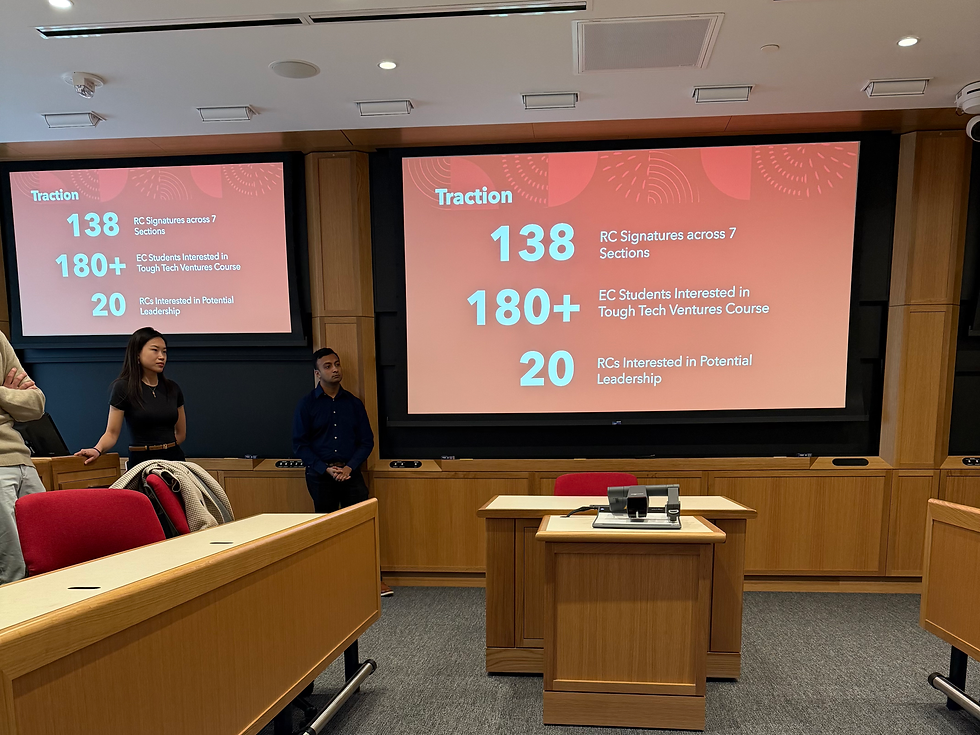
Michelle, Sanchit, and Otto Salmi (CFO, HBS ‘26) pitching to HBS MBA clubs to start Automation and Deep Tech Club in April 2025
It turns out this community grew faster than any of us would have guessed. We now have over 200 members, with notably higher interest among RCs, with 18 members stepping up to help on the leadership team. It's been clear from the beginning: you don't need an engineering degree—or any technical background at all—to find your place here. Club member backgrounds range from engineers and PMs at SpaceX, Tesla, NVIDIA, Apple, and Boston Dynamics, to founders of sustainable materials startups and early biotech companies, to public equity analysts, infrastructure investors, venture capitalists, and consultants. This diversity is one of the strengths of this club. We’re able to tackle the very real challenge of commercialization from many angles. All you need is genuine curiosity about how deep science gets scaled.

Touching the Magic
Here's what we've both learned from the journey: proximity changes everything.
You can read about metalenses, optical layers thinner than a human hair consisting of millions of nanoscale pillars positioned on a flat surface (which can be found in optical devices from phone cameras to satellite instruments), and appreciate it intellectually. But walking through Professor Federico Capasso's lab at the Harvard School of Engineering with research scientist Dr. Paul Chevalier in a visit organized by club member Daniel Trieff (MBA ‘26), we saw the colors dancing through the lenses—and appreciated the beauty behind the science while endeavoring to understand it.


At the Wyss Institute, we saw organs-on-a-chip: microfluidic devices lined with living human cells designed to replicate the function of actual human organs. The implications for drug testing and personalized medicine are staggering. Holding a living organ on a chip in our hands, we felt like we were looking into the future.

Image source: Harvard Wyss Institute Website
From Lab to Market
The magic is already becoming real. It’s actually all around us here in Boston. Capasso's metalens research has spun out into Metalenz, a venture-backed company; the Wyss Institute has launched dozens of startups from its research. The question the Deep Tech Club keeps asking is: what does it actually take to get there?
Many of our EC members are taking Tough Tech Ventures with Professors Josh Krieger and Jim Matheson, digging into the financing structures and go-to-market strategies that deep science startups require, for the playbook for tough tech looks nothing like the playbook for SaaS. We've hosted conversations about new financing mechanisms for capital-intensive ventures, about what it takes for an MBA and a PhD co-founder to build something together, stories from alumni deep tech founders, and how quantum sensing or electric aviation or biomaterials goes from lab result to scalable product.
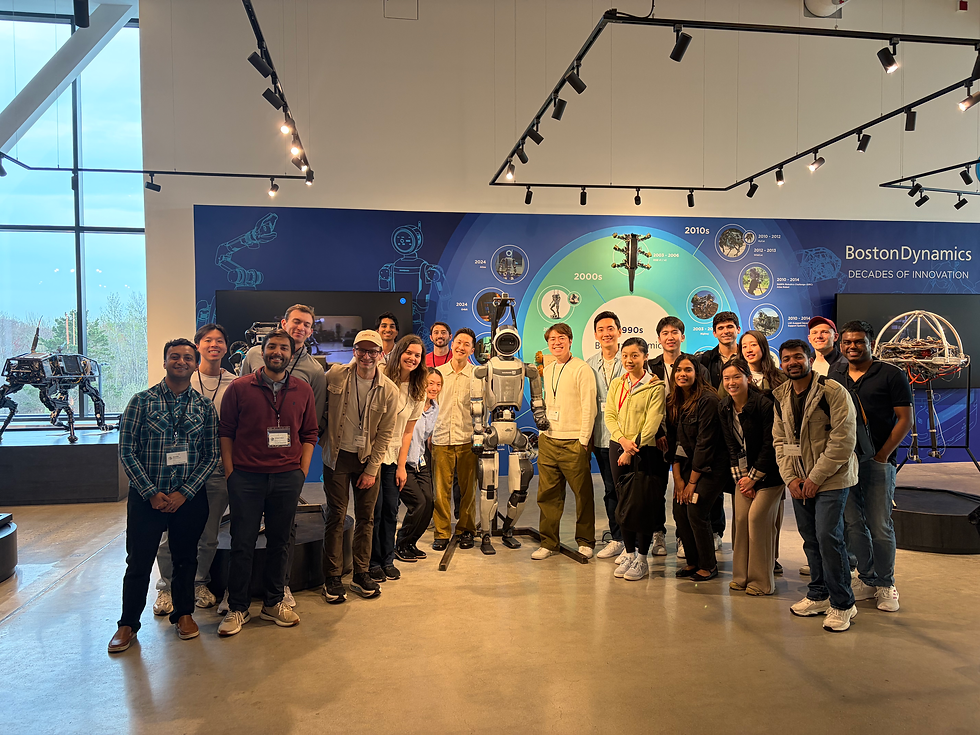
Equally valuable has been sharing each of our own deep tech experiences and insights to learn from each other about what’s possible. Part of why I (Sanchit) came to HBS was because I was lucky to see robotics become commercially real at Boston Dynamics in my last role. It was extra special to see the club visit Boston Dynamics so that they too could marvel at and dream about the latest in robotics. And this was just one of countless examples where Boston’s rich deep tech ecosystem invited us in with open arms to show us that the promise of deep tech is real.

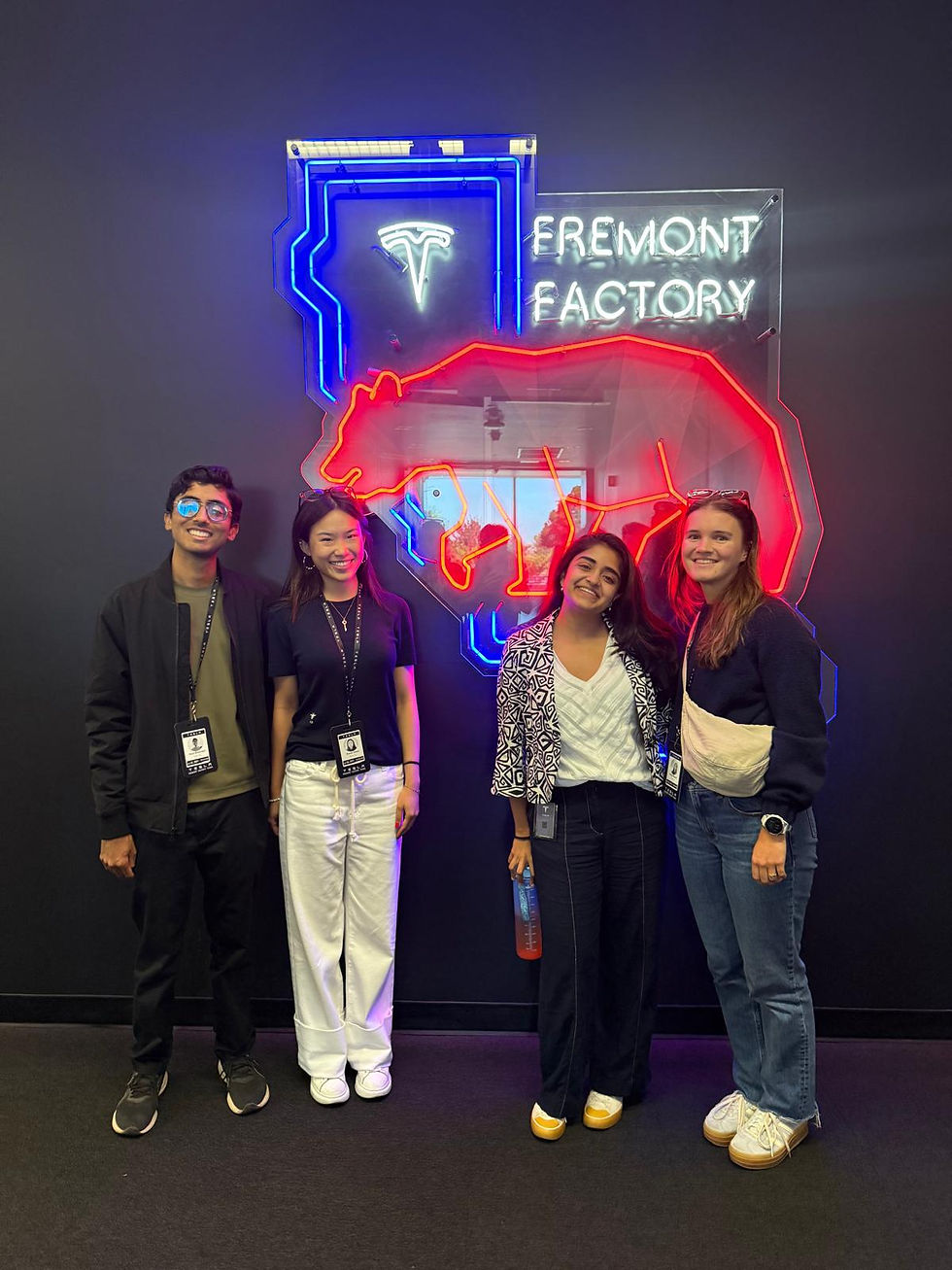
If the lab visits and company visits are about seeing magic born, the factory visits are about understanding what it takes to deliver it at scale. At Tesla's Fremont factory, club member Riva Kapoor walked us through the floor the size of 92 football fields, where raw materials become cars at a pace, scale, and level of automation that’s genuinely eye-opening. Watching a Cybertruck roll off the line, and then getting to drive one, made abstract concepts like supply chain, vertical integration, and unit economics feel very physical. Though scaling is a business problem, engineering problem, and design problem all at once, it’s ultimately a belief problem: someone had to decide this was possible before it was.

You Don't Need Permission
We are two very different people who ended up building this together: one who grew up watching a city transform overnight, who worked in finance in New York but dreamed of going to space; one who spent years actually building the robots that once felt like science fiction.
We think that's the point.
We live in a moment thick with reasons for pessimism. But our club members—and the scientists and engineers we've spent the past year talking to—aren't pessimistic. They're heads-down building things most people haven't imagined yet, sustained by a stubborn belief that the gap between "indistinguishable from magic" and "commercially real" is worth solving for.
And just like deep tech itself, believing that you can be additive to the gap might not be obvious at first, but you just need to be willing to believe first and figure out your role later.
It’s been a privilege getting to start this club and see the community blossom, but this is just the beginning. We’ve recently elected the next generation of Co-Presidents: Tyler Mangini and Gurshaan Madan, and CFO Shiham Alam (all MBA ’27). We’re excited to see just how much an HBS community of tinkerers and people who dare to dream can truly do.
Come find us: ADTC@studentclubs.hbs.edu
With Thanks
The Automation & Deep Tech Club is grateful for the support of the individuals and organizations who helped make this community possible: Otto Salmi (our third cofounder and CFO), our leadership team, Prof. Josh Krieger, Prof. Tom Clay, Prof. Jim Matheson, Prof. Alan MacCormack, Paul Hayre and the Harvard GRID, Moira Doherty (HBS ‘15), Ira Renfrew (HBS ‘14), Alex Zannos (HBS ‘25), Christine Keung (HBS ‘20) of J2 Ventures, Nina Butler of Pillar VC, and the MBA Clubs Committee.

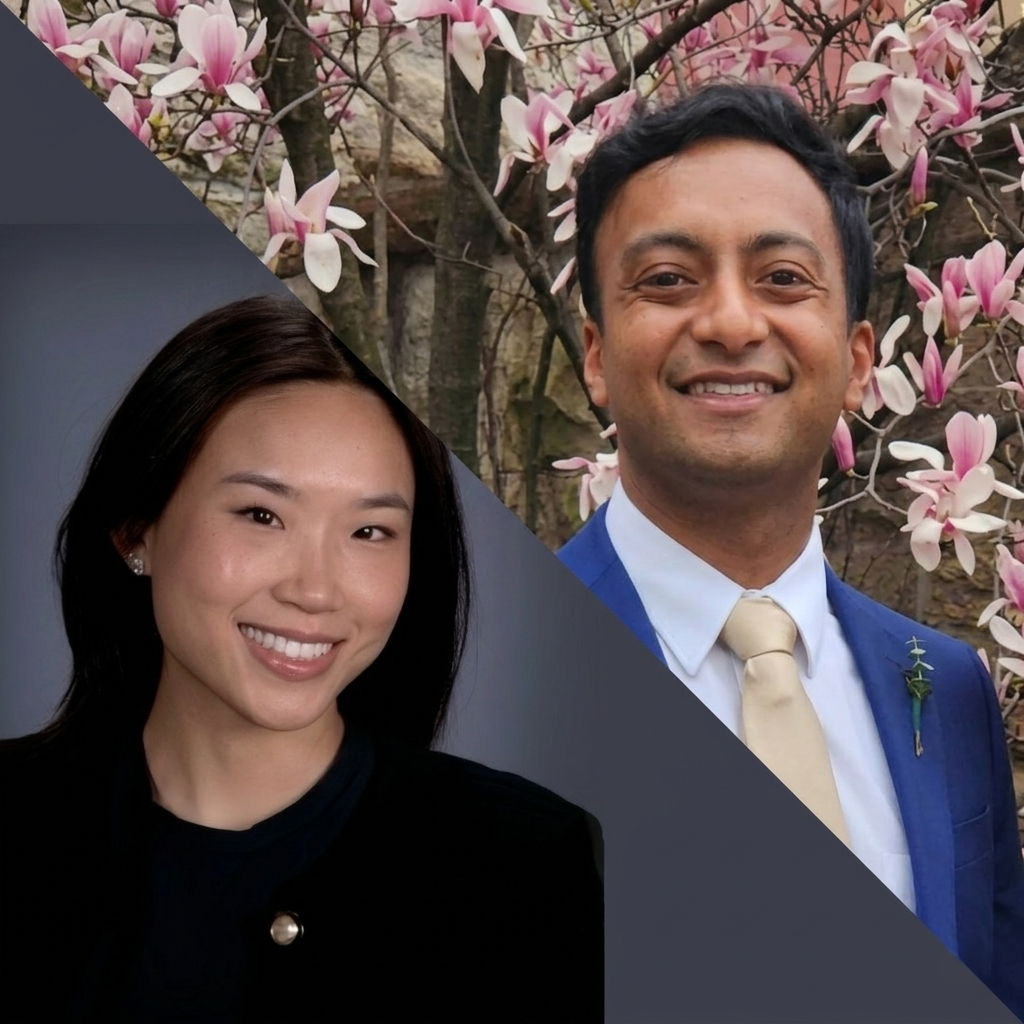
Michelle Chen (MBA ‘26) and Sanchit Bhattacharjee (HBS ‘26) are the Co-Founders & Co-Presidents of the HBS Automation & Deep Tech Club.
Michelle studied Mathematics, Economics, and Comparative Literature with a focus in French at Columbia University and worked in infrastructure investing at Blackstone before HBS. She enjoys learning physics in her spare time and dreams of going to space someday.
Sanchit studied Computer Science and Mathematics with a focus on AI and Robotics at MIT. He went on to work at Boston Dynamics helping commercialize Spot before joining the MS/MBA program at HBS to help shape how robots enter our world. Outside of work, he cares for his pet axolotl and occasionally finds himself performing at concerts.


Comments