
Sowing the Oil: A Nation Under Construction

Inside Saudi Arabia’s bid to reinvent itself
When we think about the world, we form opinions about governments, policies, institutions, and societies based on personal experience and the information we consume. These perceptions are often shaped by global headlines dominated by today’s major powers and defining events. To those living in the present, such powers can appear permanent. History, however, tells a different story: one of constant change and reinvention.
The legacies of ancient empires—from the Romans to the Ottomans—are well documented, and scholars have long sought to understand why some nations prosper while others stagnate, what sustains success, and which risks recur across development cycles. Beyond written accounts, ruins, monuments, infrastructure, offer tangible evidence of how past societies lived and organized themselves. These artifacts compress centuries of history into something immediate and observable.
Because our lives are short relative to civilizational change, we often focus on understanding the past. Occasionally, however, the world offers the opportunity to witness structural transformation as it unfolds. In January, I had such an opportunity while visiting the Kingdom of Saudi Arabia to assess Vision 2030 - an ambitious national project led by Crown Prince Mohammed bin Salman (MBS). Its goal is to reduce the Kingdom’s dependence on oil and reshape the country around three pillars: a vibrant society, a thriving economy, and an ambitious nation.
What can be learned from observing such transformation firsthand? What conclusions can reasonably be drawn, and what risks threaten its success? This essay synthesizes my observations from the in-country immersion, informed by academic experts and journalists, economic reports, conversations with leaders responsible for execution, discussions with business leaders, and exchanges with everyday citizens. These reflections were further refined through conversations with my brilliant classmates who shared the experience.
What stood out most about Vision 2030 was not only its scale, but its coherence and depth of topdown support. While much attention is given to headline-grabbing giga-projects—such as NEOM, which has since been scaled back—the more striking feature is the breadth of transformation being pursued simultaneously. This is particularly notable given that five-year development plans are not new, either in Saudi Arabia or elsewhere. Many fail due to weak leadership, institutional misalignment, or an inability to think beyond political cycles. In Saudi Arabia’s case, these failure modes appear to have been deliberately addressed.
This is largely attributable to MBS’s consolidation of power. By reducing the political influence of the religious establishment and pushing through socially and economically sensitive reforms—such as expanding women’s participation in public life—he has created the conditions for decisive action. Whatever one’s normative view of this concentration of power, its effectiveness in enabling rapid reform is difficult to deny. The comparison to Singapore’s Lee Kuan Yew is apt: a strong leader with a vision, willing to reposition a nation for long-term success with little time for critics. From an execution standpoint, the structure of Vision 2030 is unusually rigorous. The vision is anchored in three pillars, broken down into 27 branch objectives and further into 96 strategic objectives, each aligned with one of the overarching themes. These objectives are publicly available and supported by national programs ranging from housing and fiscal sustainability to privatization and human capital development.
It is at the program level that ownership, budgets, timelines, and KPIs are defined. This disciplined linkage between objectives and execution reduces complexity, increases transparency, and limits waste. It also enables adaptation as external conditions change—such as oil price volatility or mounting fiscal pressure, both hot topics during our visit. For a transformation of this magnitude, methodical execution seems essential.
Even the most elegant strategy, however, cannot succeed without societal belief and participation. One of Vision 2030’s core pillars—building a vibrant society—depends fundamentally on citizen buy-in. Nowhere is progress more visible in this area than in the redefinition of women’s roles. Walking through Riyadh or Jeddah today, it is difficult to reconcile the present reality with the fact that only a few years ago women were prohibited from driving and subject to religious policing. Nearly everyone we spoke with emphasized how quickly society adapted to these changes, often exceeding official expectations. Saudi Arabia’s demographics help explain this receptiveness: a young population that is globally connected, technologically fluent, and more open to change than previous generations. While decades of gender segregation cannot be undone overnight, the shift from aspiration to lived reality is meaningful.

One conversation was particularly illustrative. Speaking with a young Saudi woman on the outskirts of Riyadh—at a weekly bonfire gathering that serves as a local analogue to Friday beers—I asked where the desire for change originated. She described traveling within the Gulf and observing reforms already implemented elsewhere. Her response was a reminder that ideas move faster than institutions, and that exposure to other societies can quietly reshape expectations long before formal reform arrives.
Despite this progress, the risks to Vision 2030 are substantial. Some are specific to Saudi Arabia; others are common to any nation attempting transformation at this scale and speed. First, regional stability. The projects envisioned depend on sustained capital flows, tourism, and foreign engagement—all requiring geopolitical stability. Saudi Arabia has positioned itself as a regional leader with global ambitions, evident in its investments in AI, defense partnerships with the US, and careful management of its economic relationship with China. The unresolved questions are how long this balancing act can be sustained, and whether Iranian influence can be curtailed.
Second, economic sustainability remains a central concern. The Public Investment Fund (PIF)
plays a dual role as sovereign wealth manager and active nation-builder. This creates risks of
crowding out private capital, particularly in sectors such as real estate and infrastructure. There is
also the risk of economic leakage, where investment dollars flow abroad through imported goods
and services rather than building domestic supply chains. Balancing state-led acceleration with
genuine private-sector development will be critical.
Third, cultural transformation presents longer-term uncertainty. As Saudi Arabia opens itself to greater diversity of thought and experience, questions arise about how these changes will coexist with religious tradition. Official narratives suggest no inherent contradiction, but outcomes remain to be seen. Indicators such as language retention, evolving family norms, and global engagement through events like EXPO and the World Cup will reveal how deeply reforms are being internalized.
Finally, there is key-man risk. Can Saudi Arabia build institutions strong enough to sustain this trajectory beyond MBS’s tenure? Early signals are mixed but encouraging. Anecdotally, public sector roles now demand longer hours and higher standards than private-sector positions—the reverse of historical norms. Whether these shifts endure will determine the vision’s longevity. While risks remain—securing top talent and sustaining foreign direct investment among them—the pace and scale of change are unmistakable. Even during our brief visit, the capital markets authority announced plans to open the stock market to foreign investors - yet another change in the right direction. The transformation is visible on the streets and reinforced by an unusual degree of institutional alignment. Skeptics may attribute this unity to coercion; believers to bold leadership, hard-earned lessons, and a willingness to challenge the status quo in pursuit of long-term national benefit.
The underlying ambition, however, is not a new concept. In 1936, the Venezuelan visionary author and politician Arturo Uslar Pietri urged his country to “sembrar el petróleo”—to sow oil by converting resource wealth into lasting, diversified prosperity. Not by false claims of redistribution but by long term investments in education, institutions and the broader economy. Nearly a century later, Venezuela’s struggle has not been a lack of vision, but a failure to realize it. My hope is that we learn from these attempts—both the brief successes and the lost decades—and finally articulate, and execute, a vision of our own capable of transforming society.

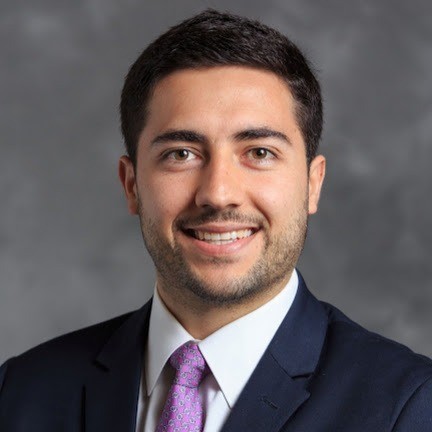
Alejandro Moreno (MBA ‘26) is from Caracas, Venezuela. He studied Industrial Engineering and Engineering Management at Northeastern University where the co-op program (6-month internships) took him from Boston to Singapore to NyC. Prior to HBS he advised PE & corporate clients on M&A integrations and separations at PwC. Alejandro is a leader of the HBS Soccer Club and dreams of bringing change to a democratic Venezuela.

Comments