
The Voting Rights Paradox Between Equality and Equity

How CPG brands launch, test, and learn in real time.
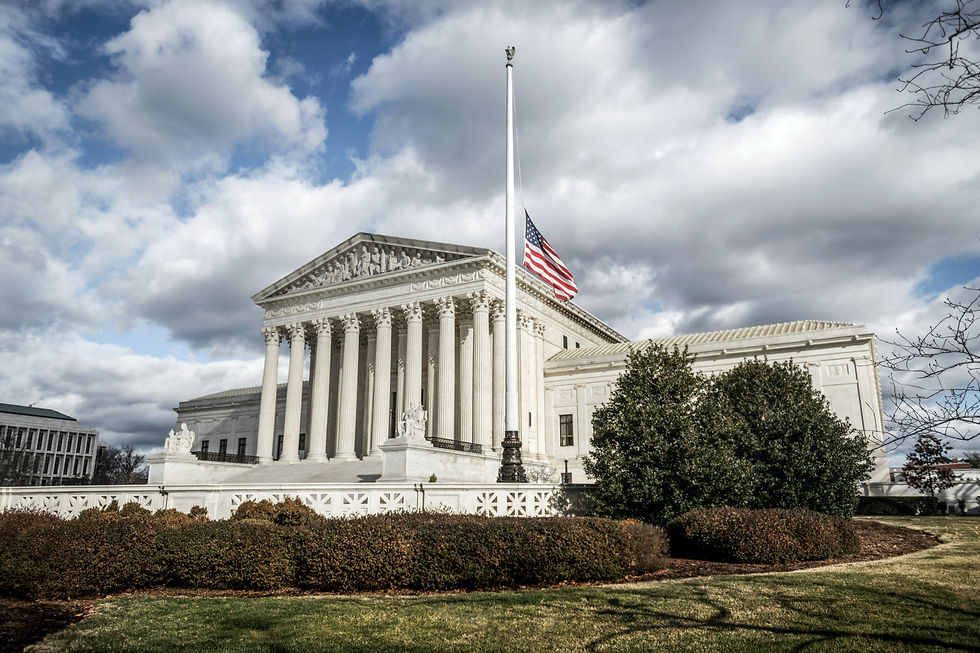
In a pivotal case that could reshape the nation’s electoral landscape, the Supreme Court is set to decide whether Louisiana’s newly drawn congressional map — crafted to amplify voting power — crosses a constitutional line by prioritizing race over neutral redistricting principles. The paradox at the heart of this legal showdown — ensuring fair representation while avoiding racial gerrymandering — has the nation holding its breath as the justices grapple with the tension between equality and equity.
Just one month ago, in Louisiana v. Callais, the Court heard oral arguments on this constitutional dilemma. The case revives a long-standing question: how to balance voting equality with concerns about racial gerrymandering. At its core lies a familiar economic debate: equity versus equilibrium. Simply put, should the American pie be distributed equally or equitably?
When Congress passed the Fourteenth Amendment in 1868, its Equal Protection Clause and Due Process Clause established the rights to life, liberty and property as constitutional guarantees. Yet nearly a century before President Lyndon B. Johnson signed the Voting Rights Act (VRA), which sought to ensure equal access to the ballot for Black Americans.
The VRA, rooted in the Fourteenth Amendment, is the same precedent challenged in the 2022 version of Louisiana v. Callais, in which lower courts found that Louisiana’s congressional map — with only one Black-majority district — was racially gerrymandered. In a 2-1 decision, Federal Judges David Joseph and Robert Summerhays blocked the map’s use and required the state to draw a new one. The resulting map added a second Black-majority district for the 1.4 million Black residents who make up 31% of the state’s population.
Louisiana has six congressional districts and a population of 4.6 million. A purely proportional map would suggest roughly two districts with Black-majority populations. But congressional districts — like cities — are not geometric abstractions or slices of a pie. Redistricting is both double-edged and imperfect: too blunt to slice evenly and too constrained to capture the full spectrum of America’s racial and demographic complexity.
The Supreme Court must now review the newly redrawn map. A fresh group of voters has asked the Court to strike it down, arguing that creating two Black-majority districts violates the Fourteenth Amendment’s Equal Protection Clause by making race the predominant factor.
With prudence and a delicate scale, the nine justices must weigh democratic principles, original and textual interpretations of the Constitution, and the practical realities of representation. Their decision will set precedent not only for Louisiana but for every state where congressional maps must withstand scrutiny under both equality and, implicitly, equity.
If the Court overturns the district court’s ruling, Louisiana’s 1.4 million Black voters may lose the additional district created in 2022.
The VRA has survived similar challenges before. In the landmark 1964 case Reynolds v. Sims, the Court struck down Alabama’s legislative districts for giving disproportionate representation to rural areas. Chief Justice Earl Warren wrote, “Equal protection requires that state legislative districts should be of roughly equal populations.” In short: one person, one vote.
If Chief Justice John Roberts and his colleagues determine that race cannot be considered in redistricting, Louisiana will likely revert to its previous map — an outcome unlikely to stay confined to Louisiana.
As the Court revisits Louisiana v. Callais, it will once again confront the debate between voting equality and racial gerrymandering and, inadvertently, the broader American question of equity. The implications will likely extend beyond voting rights to other civil liberties grounded in the Fourteenth Amendment. Yet as long as the Constitution stands, states, lawmakers, and voters — Black and non-Black alike — must continue to meet the amendment’s core mandate: “No state shall… deny any person within its jurisdiction the equal protection of the laws.”

Ibe Imo (MLA, Journalism ‘25) is a technology leader and founder of Merie Studios, a digital storytelling platform that leverages investigative journalism to provide expert insights on artificial intelligence, venture capital, and energy. Merie Studios empowers ventures and firms to unlock imagined value. With a team of attorneys and software engineers, Ibe leads research and investigative journalism to spark crucial discussions and uncover insights to transform new ventures and SMEs.


This is a thoughtful discussion of the tension between equal treatment and equitable representation. The redistricting debate shows how difficult it can be to apply broad constitutional principles to real communities with complex demographics and competing interests. I especially liked the point that congressional districts aren't simply mathematical slices of a population the practical consequences of how lines are drawn can have a major effect on political representation. For a different kind of strategic problem-solving challenge, you can also explore this Block Blast strategy solver.
An interesting look at the tension between equal representation and equitable representation. Redistricting shows how difficult it is to balance constitutional principles with the practical realities of diverse communities. The broader implications make this a particularly important debate.
For gamers looking for a useful trading resource, Blox Fruits trading guide is worth checking out.
This essay employs exceptional writing Granny 2. Your insights are incredibly evident and straightforward to understand due to the organization of your thoughts.
Wacky Flip combines challenging stunt mechanics with lighthearted physics-based humor. Players need precise control to survive increasingly difficult jumps. The game rewards smooth movement and accurate landings. New obstacles appear regularly to keep gameplay engaging. Failed attempts often create memorable crash moments. Practice helps players master difficult stunt sequences.