
Being Your Own Closest Confidante

On consciously crafting our personal narratives
On a chatty March jog with a friend from my section, she mentioned something on which I've since been ruminating. Since coming to HBS, she has been doing regular check-ins with her long-term partner, specifically to make sure she is the same person now that she was when she arrived here in the fall. This friend has a steadfast, service-oriented value center—her comments in class often introduce a clear note of morality and empathy to conversations that can, on occasion, be found wanting. And while she came to HBS with a clear view of what she wanted to gain from the experience, she didn’t want it to fundamentally change the person she was.
One of the traits I most admire in others, that I find equally aspirational and inspiring, is self-knowledge. There are two parts to this: understanding who one is and wishes to become, and respecting that in one’s behavior and decisions.
For example: my paternal grandfather, who passed away in late 2024, was a math teacher in rural India. But math was an important throughline for him, one that transcended his career in many ways. He named his dogs Bindu and Rekha, the Telugu words for “point” and “line.” Until the day he died, his cognitive function was incomparably sharp—because he filled much of his free time doing difficult math problems that he found online. When I was preparing for the GMAT, I gave him some of the hardest math problems I could find, and he was like a kid in a candy store. He knew what he loved, and he pursued it; he knew who he was, and he acted accordingly, even as the world changed and his life changed with it.
Interactions like those with my grandfather and my running buddy have had me pondering on the effect that HBS—or whatever milieu in which you find yourself—can have on who you are. If, as Jim Rohn has argued for years, you are the average of the five people with whom you spend the most time, what happens when you arrive on campus and that composition is fundamentally altered?
Of course, it is appreciably more altered for some than for others. Depending on the industry and geography you are coming from, you may have transplanted yourself into the student life but broadly retained your social and professional network. Maybe the group with whom you spend the most time has actually not changed very much.
For some, like me, that is far from true. As a software engineer in Seattle, phrases like “venture capital” and “entrepreneurship through acquisition” were decidedly not part of my vocabulary.
Now that I’m here, I can definitively say that this group—the five people with whom I spend the most time—has changed, and has changed me. I love the friends and family I’ve known for years, who I hope remain in my life forever, but I feel challenged in different ways here, exposed to new learnings and avenues of exploration I would never have otherwise known existed. I have a deep-seated appreciation for the great diversity of backgrounds and perspectives in my section. I'm awed by classmates from tech and finance, whose grasp of concepts both quantitative and qualitative is impressive and deep. I've so loved the breadth of emotions my classmates have inspired with their MyTakes.
But when I think about intentionally curating my milieu, the five or so people with whom I spend the most time, one question stands out to me: should I ensure that one of these people is me? If we don’t want the world around us to dictate who we become, then we should be making ourselves our closest confidantes.
We all apply to HBS with some idea of who we want to be when we leave. We channeled our inner dreamer to craft admissions essays and interview storylines, weaving together our past experiences to prove that we can become the people we aspire to be. But when we actually get here, it’s easy to fall out of touch with that vision: whether that be in how we want to allocate our time, the people we want to get to know, or the job title or industry we are seeking to pursue. For example, I knew that I wanted to try working in early stage clean energy security and resilience while at HBS. But seeing everyone around me sprinting to find a summer internship, I was certainly tempted to apply to roles that were well outside my zone of interest. A quick check-in with the person I was when I got here reminded me to redirect my focus.
Recently, I sat down and created a note on my phone titled “Who am I, and who do I want to be?” In the note, I wrote down the key tenets that I hold to be most true about myself at this moment. I want to return to this note periodically–open to changes, but using it as a grounding force. It's similar to looking back at my younger self, and hoping that she’d be proud of who I am now.
I'm coming to realize that just like we care about the people with whom we surround ourselves, we should care about making sure that one of those people—us—is fulfilled, encouraged, and staying true to who we are.
A couple of years ago, I read a Haruki Murakami book called What I Talk About When I Talk About Running. He says something in it that I reflect on quite a bit:
“I'm often asked what I think about as I run.... I always ponder the question. What exactly do I think about when I'm running? I don't have a clue.”
By his own reporting, Murakami runs nearly every day. That time is his to spend with himself, no agenda, no deadline, no music playing in his ears, no direction. He runs “in [his] own cozy homemade void, [his] own nostalgic silence.”
And sometimes, in the silence, important thoughts come to the fore; ideas that we may have been pushing aside, not acknowledging in the pursuit of more, better, sooner.
My argument is that yes, the people around you matter, and quite a bit, but a relationship we cannot leave by the wayside is the one we have with ourselves.
Maybe we should all find our equivalent of Murakami’s daily run, or my friend’s periodic check-ins, or my new iPhone note. Because HBS is a great place to meet people that both inspire and challenge us, but we all came in with our own compasses and motivations. If we are the average of the five people with whom we spend the most time, we should ensure that one of those people is us.

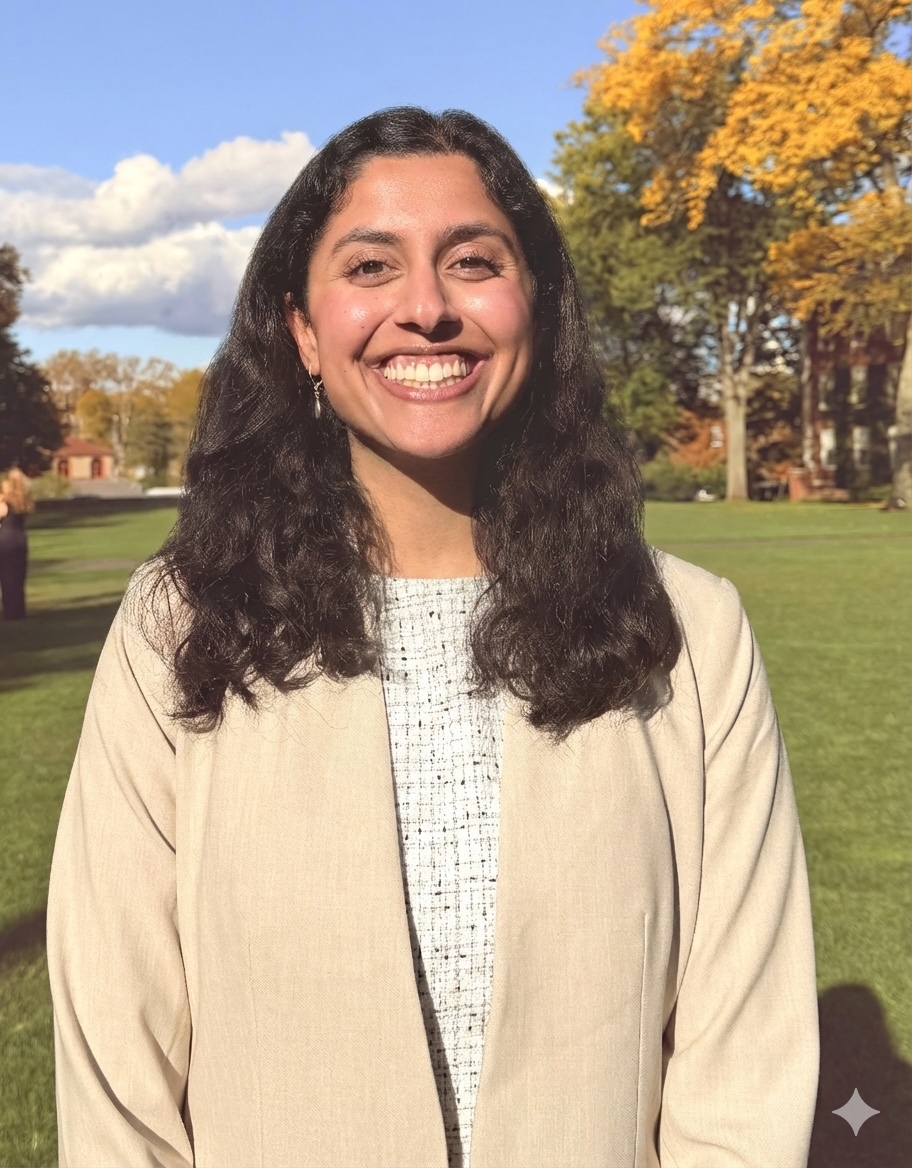
Keerthi Medicherla (MBA ’27) is originally from McLean, Virginia. She graduated from the University of Virginia with a double major in Computer Science and Global Studies in 2022. Prior to HBS, Keerthi worked as a software engineer at JPMorganChase in Seattle, WA.


Comments