
Davos: Demystifying the World Economic Forum
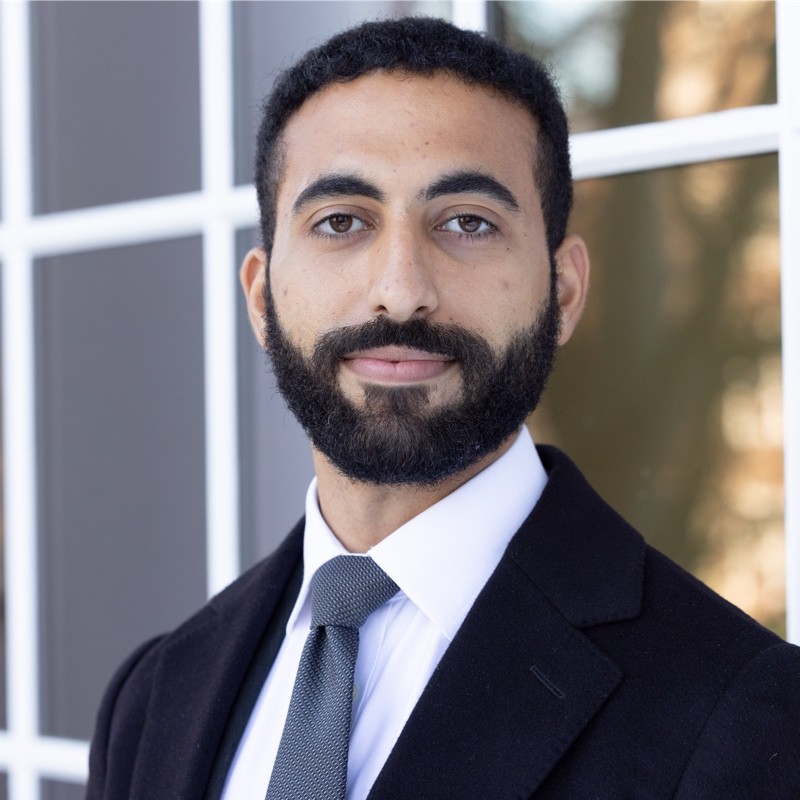

Joe Landon (left) and Zameer Kassam (right) at the Harvard reception during the 2026 World Economic Forum in Davos, Switzerland.
The organizers of Harvard’s official reception at the World Economic Forum came to campus. Here’s what they shared
Every January, roughly 3,000 leaders from government, business, and civil society gather in Davos, Switzerland for the World Economic Forum. Most people only see the headlines. On April 18, two HBS alumni came to campus to share what actually happens there.
Zameer Kassam (MBA ’07) and Joe Landon (MBA ’07) joined me for a fireside chat titled Davos: Demystifying the World Economic Forum. Zameer is an entrepreneur and the founder of Zameer Kassam Fine Jewelry, a bespoke engagement ring and fine jewelry firm that is the subject of an HBS MSO case study and has been featured in The New York Times and Vogue, with pieces worn on red carpets around the world. He began his career at McKinsey & Company, spent time at MTV Networks, and later ran a jewelry business unit across LVMH and De Beers Group before launching his own company. Joe is the co-founder of Rendezvous Robotics, a company building modular spacecraft that autonomously assemble in orbit. He previously served as Vice President of Advanced Programs at Lockheed Martin Space, and before that was CFO of Planetary Resources, the asteroid mining venture. He also co-founded Space Angels, one of the first angel investor networks focused on space startups.
Their paths could not be more different, but they share an HBS section, a graduation year, and a project they have built together over several years: the official Harvard University reception at Davos. The event drew over 500 registrations, and filled the room.
What Davos actually looks like
Zameer and Joe walked through how Davos actually works in practice. At a high level, it’s structured in layers: the official Congress Centre hosts the marquee sessions with heads of state and Fortune 500 CEOs, while an entire parallel world of side events, private dinners, and smaller gatherings unfolds across the town. In reality, much of the most valuable interaction happens in that second layer.
A typical day might start with breakfast meetings at 7 a.m. and run through panels and one-on-ones, but that’s only half the story. The evenings, which often begin around 8 p.m. and stretch to 3 or 4 a.m., are just as important, if not more so. Dinners, drinks, wine tastings, piano bars, and the now-iconic late-night sing-alongs are where people relax, open up, and connect more naturally. In fact, many experienced attendees prioritize these evening gatherings and skip much of the daytime programming altogether.
What surprised many in the room was how accessible some of these environments can be. It’s not unusual to find yourself in close conversation with CEOs or even heads of state at events hosted by organizations like McKinsey & Company, KPMG, CNBC, or Bloomberg. This year, even the United States Government had a strong on-the-ground presence with the introduction of USA House, adding yet another layer of programming and access.
They were also candid about logistics. Official WEF badges can be expensive and are typically sponsored by companies or organizations. But beyond that, the broader ecosystem is far more open than most people expect. There are structured entry points like the Global Shapers community for those under 30, the Young Global Leaders program for those under 40, and various industry delegations that bring emerging voices into the fold.
The overarching takeaway was simple: Davos is not nearly as closed as it seems from the outside. For those willing to engage, there are near-limitless opportunities to convene, collaborate, and have real impact.

The Harvard reception
The heart of the conversation was the Harvard reception itself. Zameer and Joe described how they built it over several years into one of the signature gatherings of Davos week. The format is deliberately simple: welcome remarks from the co-hosts, followed by open networking and conversation. The focus is entirely on the quality of the people in the room and the connections that form between them.
Attendance is by invitation and limited to members of the extended Harvard community and select guests. The guest list includes senior alumni leaders across business, government, finance, and science, as well as current faculty and administrators from the university. In past years, demand has consistently exceeded capacity, with the organizers aiming to keep the event intimate. The reception has been hosted at prominent venues in Davos, and the organizers work with sponsors to provide the setting, food and beverage, and branding that reflect Harvard’s role in the broader WEF community.
What came through clearly is that the reception is not just an alumni social event. It serves as the primary coordination point for Harvard’s presence at the forum, bringing together people from across schools, industries, and geographies who share an institutional connection but might never otherwise meet during a chaotic week. For many attendees, the Harvard reception is the one event they make sure to attend every year.
Zameer put it well: “For years, I had the privilege of creating engagement rings and other meaningful pieces for HBS classmates and alumni. When I got to Davos, I began to recognize many of those same individuals, not just as former clients, but as leaders of organizations, teams, and even countries. It was a striking and humbling moment that showed me the power of the HBS community in a very real way, and it opened doors into an environment that is typically quite closed and difficult to access.”
Getting involved
Zameer and Joe are already organizing the 2027 Harvard reception, and for the first time, they are looking to involve current HBS students in the planning and coordination. This is an open invitation to anyone in the HBS community. Whether you want to attend Davos, help organize the reception, contribute to outreach and sponsorship efforts, or simply learn more about how the World Economic Forum works, they want to hear from you.
The reception is one of the few places where current students can plug directly into the most senior layer of the Harvard alumni network on a global stage. It is a real opportunity, and it is available to you right now.
If you are interested, reach out to me at abedir@mba2026.hbs.edu, and I will connect you directly with the organizers.

Adham Bedir (MBA ’26) is an entrepreneur. Prior to HBS, he worked in investment banking at J.P. Morgan and private equity at DPI in London. He is originally from Egypt.


Comments