
Eating Turf: Accounting, Meet Rugby
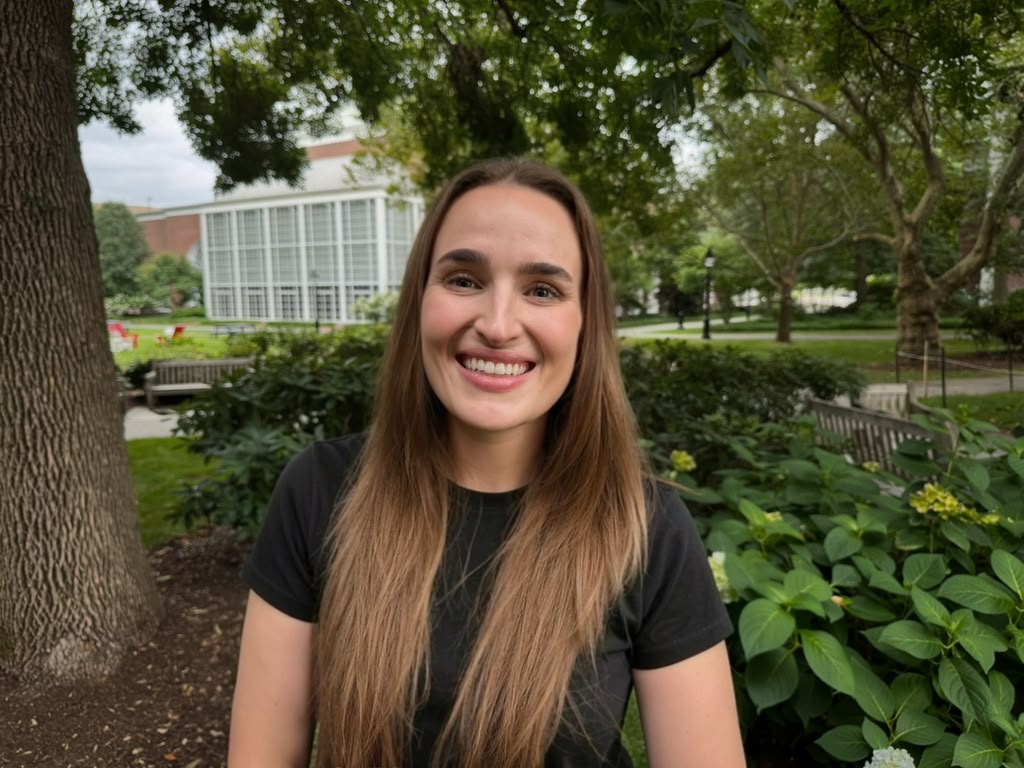

Icon, queen, absolute baller Ilona Maher
On ambition, embarrassment, and the freedom of beginning
Walking on to a Division 1 rugby team in my senior year of college was the most fun I’d had in a decade. A multi-varsity high school athlete, I found enormous freedom going into a space where my background gave me a general foundation but this new context was entirely unfamiliar. It helped that I was highly motivated to not get bulldozed by athletes thrice my size.
As a beginner, the people around me had no expectations that I would execute perfect plays on the pitch (fellow Americans, this is what the globe calls the “field”). Perhaps more importantly, I didn’t expect it of myself. I knew I probably wouldn’t start; I might not even play in an actual game.
I was stoked.
My intentions were clear. In order of importance:
Keep my body healthy
Meet new people
Learn
Nowhere on my list was to win, to start, or even to get playing time—that wasn’t why I had tried out, and it wasn’t why I would keep showing up.
To be clear, this involved physical, public failure after failure for two-to-three hours every evening. I felt like an idiot: while the experienced folks ran the playbook, I’d spend 45 minutes learning how to fall on turf without hurting myself; the next day, I learned how to roll, and then how to tackle, and then how to be tackled. Eating literal grass required an education.
They handed me a ridiculously shaped ball. My mom (shoutout) had taught me to throw a perfect spiral with an American football, and this was NOT that. Here, I had to stand in a line just 5 feet from another player and figure out how to make the stupid ball move in a stupid horizontal direction using stupid lateral movements that were completely foreign to me. The only instruction I knew how to do was “run”—and even then, I suddenly had an added threat of someone running full speed right at me. Unrelatedly, my sprint and agility metrics improved enormously.
I had nothing to prove, and no one to prove it to: women's rugby didn’t have a ton of street cred, though I was happy to see that it did inspire a newfound, healthy sense of fear from the men around me. What I did have was plenty of room to watch. How did Christina manage to set things up so quickly and get out of the way? How did Riho communicate with the players next to her to move so quickly up the field? How did Matalasi always manage to be in the right place at the right time?
When Mata cycled out to grab water, I’d ask how she’d avoided so-and-so during the last play. She walked me through it. When Riho stuck around after practice for extra reps, I asked if she wouldn’t mind if I joined.
Suddenly, and without notice, our coach put me on the pitch during an actual game. The theory of tackling all of a sudden transformed into my reality, and I watched a whole human being transform into a barreling tractor whose only mission was to reverse the order of my head and my feet and to take the ball that had somehow, terrifyingly, ended up in my hands.
By the end of month three, they were talking to me about a starting position the following season.
I looked around, surprised. I’d spent those months looking like an absolute idiot, embarrassed to be asking questions as basic as how to pass a ball, how to stay on my feet, and what the name of my position actually was. There were always more questions, more film sessions, more skills to learn. Without the pressure of a goal whose outcome I couldn’t fully control, I was having a blast. Inadvertently, it showed in my performance.
I never found out whether I’d actually start. The pandemic hit, and our season ended. Maybe the prospect of a starting role would eventually have brought back old habits, anxieties and expectations, but I never got the chance to find out. Instead, I was left to percolate on why I had so much fun getting beaten to a literal pulp.
In other words—why, without a single performance-related goal, did I learn more, laugh louder and, ultimately, actually perform better?
A 2024 meta-analysis by Marc Lochbaum and Cassandra Sisneros, published in the European Journal of Investigation in Health, Psychology and Education, found that sports environments emphasizing learning and personal improvement were associated with greater positive emotion and satisfaction. Separately, a review of 27 studies by Ollie Williamson and colleagues, published online in 2022 in the International Review of Sport and Exercise Psychology, found that process goals—focusing on how to execute a task—had larger average effects on sports performance than goals focused on personal performance targets or competitive outcomes.
What we give our attention to while learning matters. I could have spent those practices comparing myself with players who had years of experience. And believe me, in nearly every other performance-related experience I’d had, that’s exactly where I’d spent precious time and energy. I think about how much joy I missed while worrying about how I measured up. What might I have enjoyed if I’d had more room, from myself or the environment around me, to ask questions, need help, and get things wrong?
In other sports, I was worried about missed shots. In rugby, I expected to miss tackles. When I did– and, inevitably, I did—I accepted the hand of the teammate offering to help me back up and, though a little bruised, asked what I could do differently next time.
There are things that are true about my environment now that were true about my environment when I first walked into tryouts. I have a foundation, but I’m still discovering how it applies here. I imagine other students feel similarly; more broadly, I think that much of the world is feeling this as our technology changes at an incalculable pace (though ANT would calculate it at roughly $1.5-2T in their upcoming IPO). There are days I approach this place with apprehension: it’s capital-H-Harvard, and I’m one of thousands. Other days –weirdly, right after I finished my first midterm– I am floating, and I can confidently assure you it had nothing to do with the grade.
There is something insatiably exciting about what I have yet to discover, whether that’s the actual definition of a T-account or how to consistently channel deep empathy into a system that hasn’t historically responded to or rewarded it. The challenge of unread books, un-held conversations, or unattended events; the comforting scent of Baker Library’s treasure troves, and the knowing looks of librarians who have seen this film before.
And, even in this consolidated world of opportunity, resource and comparative frictionlessness, still I build friction. The What Ifs, How Bouts, and Where Ats—the did-I-sound-like-an-idiot-in-my-comments, am-I-doing-enoughs, and oh-my-god-does-she-think-I’m-an-assholes.
I wonder: do I physically need to lace up my cleats and feel the visceral threat of total annihilation for me to actually accept that I can work hard without worrying about how it will turn out? Was it only when my amygdala accepted its possible fate as a pancake that my ego shrank enough to experience joy under pressure?
In rugby, I wanted what I’d come there for: health, relationships, learning. With those intentions, I could observe, inquire, and stay after practice with teammates who were better than me and willing to help me grow.
This place may be fancier, its merch pricier and its name bigger. But the classroom is just a field, accounting class is just tackling practice, and recruiting is just gametime. Time is finite, and this, just like everything else, is a game of reps—good and bad—and reflection. Rinse and repeat.
Even better if it’s right next to your team.

Kacey Sorenson (MBA ‘28) is from the San Francisco Bay Area. She’s a washed up pre-med student, having studied English and Environmental Science with an intersectional focus on the cyclical influence of humanity on the physical environment and vice versa. Over her career, she’s added the language of technology, finance, and commercial insurance to her vocabulary, scaling Nirvana Insurance—an AI-native fintech startup— from Series A through D and a $1.5B valuation in four years. She misses using an em dash, and humbly aspires to use them here without reproach.



Comments