
Four Semesters Later: Still Figuring Out How Loud to Laugh
Updated: Apr 14

The last semester feels surprisingly like the first, which is either wisdom or a refund request
Note: All the em-dashes in this text are mine. On the other hand, any traces of wisdom in this article, like all my class comments, are mere improvisations of what I heard recently.
"C'mon, we are not that special just because we got into HBS," commented a section mate in LEAD. The RC section, still new to each other, still figuring out how loud to laugh, erupted in giggles. Wise beyond its semesters, the comment touched what everyone was pumping themselves to be. Later that day, as is tradition, we wrote letters to the ten-years-older versions of ourselves. I stared at the blank page longer than I care to admit. He had made it sound simple—we are not that special—but the letter required you to assume you had already become someone worth writing to. That assumption, it turned out, was the hard part but more so on brand for this place.
It is almost funny how everyone in the first semester seems to be operating at their quirky peak. Nobody is explicitly trying to stand out; it is subtler than that, softer. You are just quietly, constantly aware of the impression you are making, unfortunately much more than you should be. The guitarists bring up music more often, the gym-enthusiasts bring up every shade of Shad, the opinionated color every discussion with their most practiced hue, and well the funny? They try slightly harder. Mid-October, I realized my jokes were seeing a slight downward NPS score. Had I committed the quintessential error of the funny guy, pushed too hard, or finally earned friends who did not oblige me with the laugh?
My Marketing professor’s cold call broke me from this particular chain of thought, bringing me back into the cruel world of the Cola wars. I managed to assemble three sentences from what my mind had half-absorbed in the first half of class, and I was saved, as I would be saved many times that year, by what became a rhetorical but loyal friend: beginning with the phrase "I wonder." Because no one can question what you are merely wondering. You are still in process. Wondering is generous to the listener, wondering disarms the inquirer, and wondering flatters everyone who spoke before you making them wonder how they made me wonder. Wondering, I discovered, is also infinite. It can last a semester. And as it turns out, it can last even longer than that.

For the last one month, even as we braced through the New England winter, there was peace in the snow not melting. Almost a strict pause enforced by a greater force. And yet; how much the ending resembles the beginning. Both semesters funnily exist slightly outside the real program: the first starts way before you realize it has, and the last is already over in some interior sense. There is a shared quality of liminality, of being physically present in a place while mentally rehearsing somewhere else. In the first semester, you are projecting forward into who you want to become. In the end, you are already inhabiting the person you have decided to be, trying them on before the costume becomes the clothes. You know when I truly believed my ex-banker best friend would become an entrepreneur after business school? It was not when he said it, it was when he gave up the vest, and when his hair started being combed less carefully to the back. Both are still acts of imagination, but one more hopeful than the other, and one that follows the semester-arc. Oh and sorry, he is still (thankfully) going back to banking.
What is strange is how your senses sharpen at both ends. In RC year, I noticed everything because it was all new: the particular creak of a Klarman Hall seat, the rhythm of a professor who always paused before calling on someone who had not raised their hand, the way the Spangler tapestry looked in the morning light versus the afternoon. Now, in the final semester, I notice all the same things again, but with the bittersweet register of someone quietly cataloguing what they are about to lose. The beautiful vines that drape the walls of Arthur Rock Center, the old beauty of the Baker library lift in the tunnels, how the doors in the Baker open in a funny direction. A dining hall that has somehow, without my noticing, become home. Arrivals and departures are the only moments that make the ordinary luminous. The long middle, comfortable, busy, habituated, is what we live in, but it is not where we see.
The identity rituals, too, rhyme across both ends. In the first semester, you perform the student you want to become: earnest, curious, trying on intellectual positions like jackets to see what fits — what you will be able to hold on to. In the last, you perform the professional you are about to be, road-testing the vocabulary of your post-graduation life before it is technically yours. It is 2026, and you can use the F-word (founder) more safely than the C-word. The gap between who you are and who you are describing never quite closes. Did the program just teach us to never eliminate that gap, but inhabit it with more grace (read: branding)?
And the questions that fill both semesters are, at their core, the same question. In September of RC year, everyone asks "what brought you here?" In the final spring, everyone asks "what did you take away?" I wonder. But in honesty, both are asking you to construct a narrative, forcing you to make your presence legible to yourself as much as to anyone else. What changes, across two years, is probably the sophistication of the answer. Not because you have resolved anything, but because you have gotten better at sitting with the irresolution. You have learned which parts of the uncertainty are productive and which are just noise. And that probably is the resolution.

The friendships, too, carry the same intensity at both ends, for mirrored reasons. In the first semester, every new connection feels potentially defining. You are sampling from a universe of people you have never had access to before, and the excitement of that is almost chemical. In the last semester, the intensity comes from the opposite awareness: that the proximity which did so much of the relational work, the shared buildings, the overlapping schedules, the frictionless availability of each other, is about to disappear. Both produce the same behavior. Longer dinners. More candid conversations at hours that probably do not make sense. A willingness to say things you spent two years deferring.
I once asked myself how I would measure my time here, and I landed on a metric that felt right at the time: how often did someone genuinely change my mind? In a moment of characteristic overconfidence, I started a note on my phone, tracking every instance in which a classmate shifted how I thought about ambition or risk or what a life in business could actually look like, while studiously declining to note down the correct number of Porter's forces. As I approach the end I find I have accumulated about ten of those entries, and what strikes me now is not the number but my relationship to the people in it—I question them more, I see them with less mystery and wonder, and I fortunately admit, that is exactly how they have come to see me.
There is a particular anxiety that arrives in both semesters, though it wears different clothes each time. In the first, it is the loud, slightly sweaty kind: do I actually belong here, among these people who seem to have arrived fully formed, with their opinions and their vests and their practiced confidence? In the end, it is quieter and, in some ways, harder to sit with: have I used this well enough, have I been curious enough, present enough, have I let this place do to me what it was supposed to do? One is about worthiness entering, the other about worthiness leaving, and the structure of the feeling is, if you pay attention, identical. What is not identical is what you do with it. In RC year I let it run the machine. Now, mostly, I just notice it, nod at it the way you nod at a familiar face in Spangler, and carry on.
And yet, I want to resist the tidy version of this story. The optimization machine still runs, I will not pretend otherwise, and anyone who has accompanied me to a CPD career fair knows this. But somewhere between the first cold call and the last, I learned to occasionally leave it running without me. To sit at a Spangler table with no agenda. To let a conversation go somewhere I had not planned. The machine churns; I just no longer feel compelled to stand at it constantly, feeding it questions it cannot answer.
A two-year program, I have come to think, is less a linear journey than a loop—the ending does not conclude the beginning so much as rhyme with it, at a higher register. You return to the same questions you arrived with, just with a quieter, more durable relationship to the not-yet-knowing.
We came in wondering if we belonged. We leave still wondering, just about bigger things. Somewhere in that shift is the answer to the letter I wrote to myself in week one. I just will not know it for another ten years.


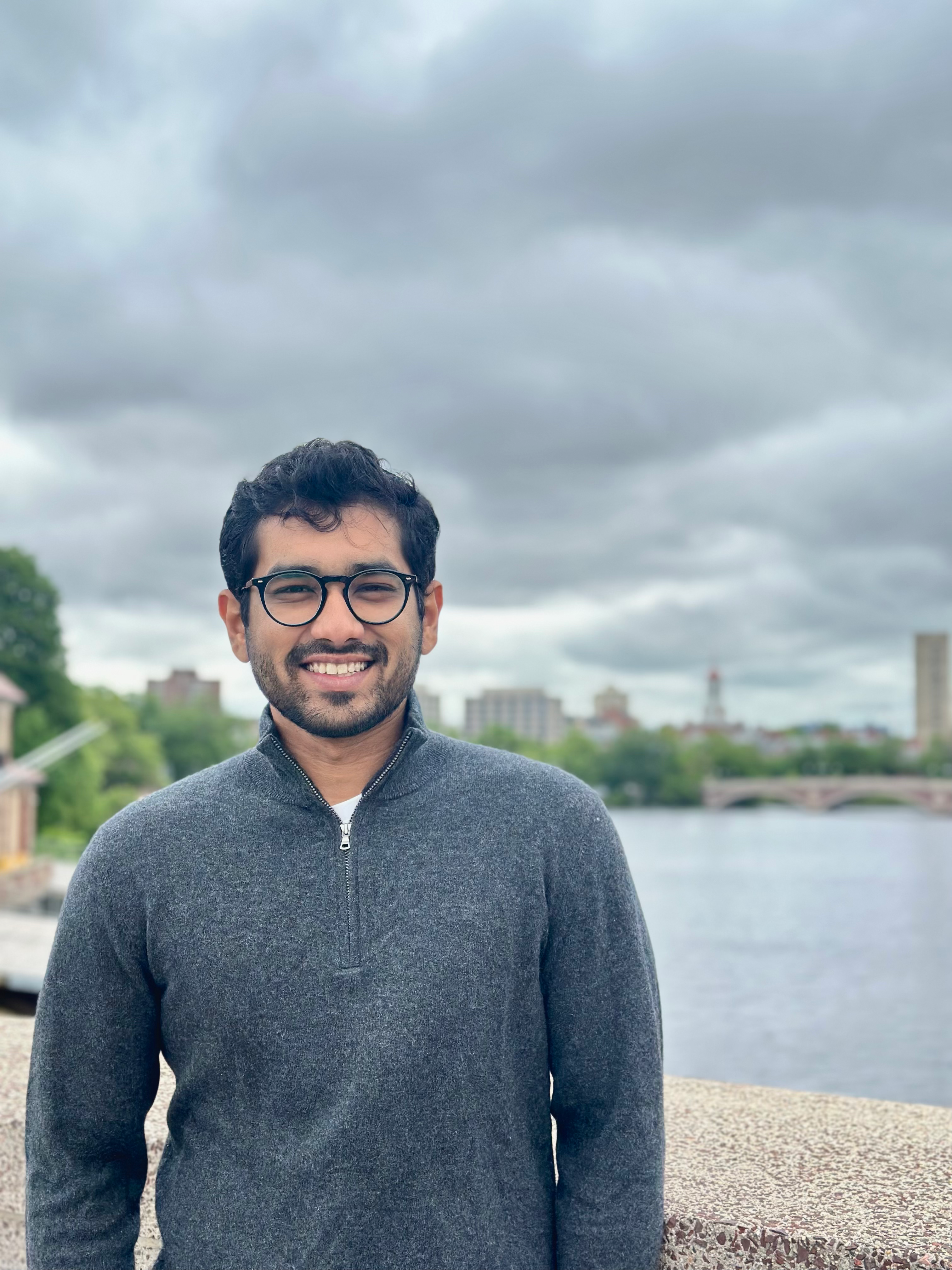
Pranav Mittal (MBA '26) is a second-year at HBS who came in optimizing and is leaving wondering, which he has been told is the right direction. Originally from India, he thinks deeply about building and investing, less deeply about whether he dressed appropriately for the weather, and considers both equally unsolvable problems.


Comments