
One Year After the Election: Why Ideological Diversity Still Matters

A reflection on political balance, intellectual humility, and what true diversity means for leadership.
What Election Night Taught Us
On November 5, 2024, when the United States elected its next president, HBS students gathered in Klarman Hall to watch the results and in Aldrich 112 for the first-ever HBS Student Bipartisan Policy Debate. One year into a new administration, and with half the campus in its first year at HBS, it is worth asking what we have learned. Perhaps the most visible lesson is the renewed appreciation for the value of diverse perspectives in our classrooms, sharpening our understanding of business, leadership, and the world.
Despite that, many of us remain unsatisfied. We look for ways to complement the case method by engaging with perspectives we may not fully understand, crossing not only physical but also ideological bridges. The idea of the HBS bubble is a recurring theme, making its appearance in conversations almost as frequent as questions about recruiting. The most ironic example is, despite the official address of the school being in Boston, the famous Bostonian accent is difficult to find. For international classmates who come here to understand the United States firsthand, this suggests that we all risk being insulated from the full spectrum of the American experience.
If the paths of alumni are any predictive factor, we will likely occupy roles that influence industries, communities, and policies, which only increases our obligation to understand diverse perspectives. It is an immense responsibility and privilege to step into the reins as advisors, executives, investors — ultimately decisionmakers. Our ability to effectively make a difference in the world will scale by our ability to intimately understand worldviews different from ours.
A Clue in the Numbers
Some classmates have stated that this is the most conservative space in which they’ve ever been, while others contend that this is the most progressive space they’ve experienced. Both are likely true given the places from which we all come, but how should we weigh these? There may be a clue in the numbers. Last year, The Harbus gauged student sentiment during the election season, finding that over 70% of students supported Kamala Harris and about 20% of students supported Donald Trump. However, Trump received about 47% of votes nationally, showing there is a major disconnect between HBS and the broader population.
The Diversity We Don’t Talk About
Understanding conservative viewpoints is not about partisanship, but rather about rediscovering a set of ideals that are often missing from campus discourse. Continuity, stewardship, and restraint are virtues to guard what may prove to be timeless. As Gustav Mahler wrote, “[t]radition is not the worship of ashes, but the preservation of fire.” These principles, when balanced with progressive ideals of innovation and disruption, anchor our ideas in sustainability as we go forth to make a difference.
If we truly value diverse perspectives, especially those that challenge prevailing assumptions, then we should also seek out viewpoints that may be rare on campus but vital to understanding the societies we aim to serve. These perspectives can be hard to find at HBS, but they are the perspectives that challenge us, refine our judgement, and ultimately make us better leaders.
P.S. Stay tuned for an event series exploring perspectives different from our own (hint: this includes everyone).

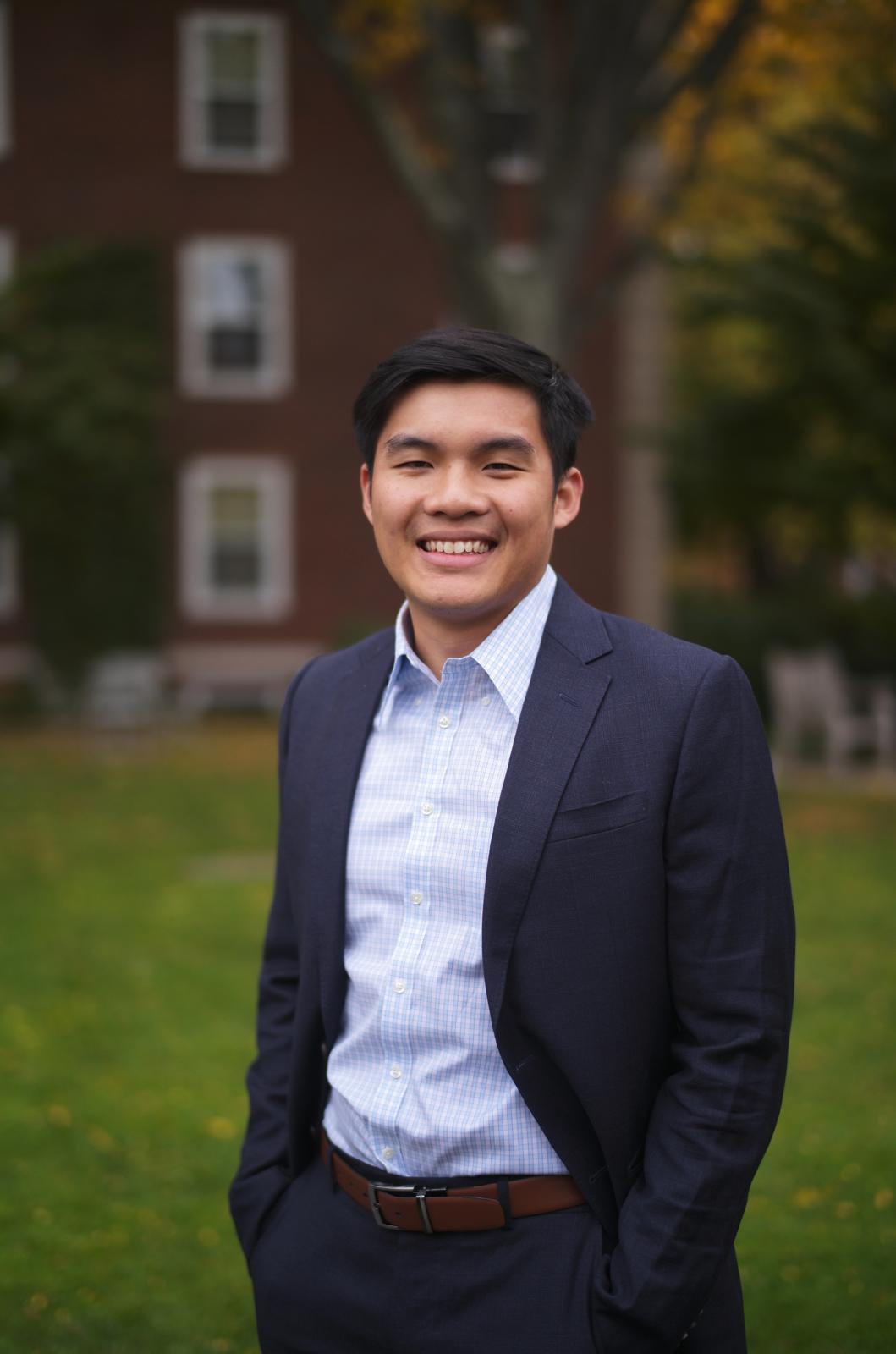
Edward Doan (MBA ’26 ) is originally from Orange, TX. He graduated from Lamar University with a BS in Chemical Engineering in 2020. Prior to HBS, Edward worked as a manufacturing engineer at Procter & Gamble and Stryker in Virginia. He can be found pondering theology and its implications or taking calculated risks in poker or his career.


From my personal gameplay experience, the hardest missions are rarely difficult because of controls but because they require patience, observation, and understanding the right moment to act. Scary Teacher 3D
Grow Garden is a fantastic browser game with peaceful gameplay, beautiful visuals, and creative gardening mechanics. Building and expanding your own garden feels satisfying and relaxing. It’s a must-play online game for anyone who enjoys casual farming adventures!